
A guide to understanding the five levels of senior care in Ontario and determining which type of support is best

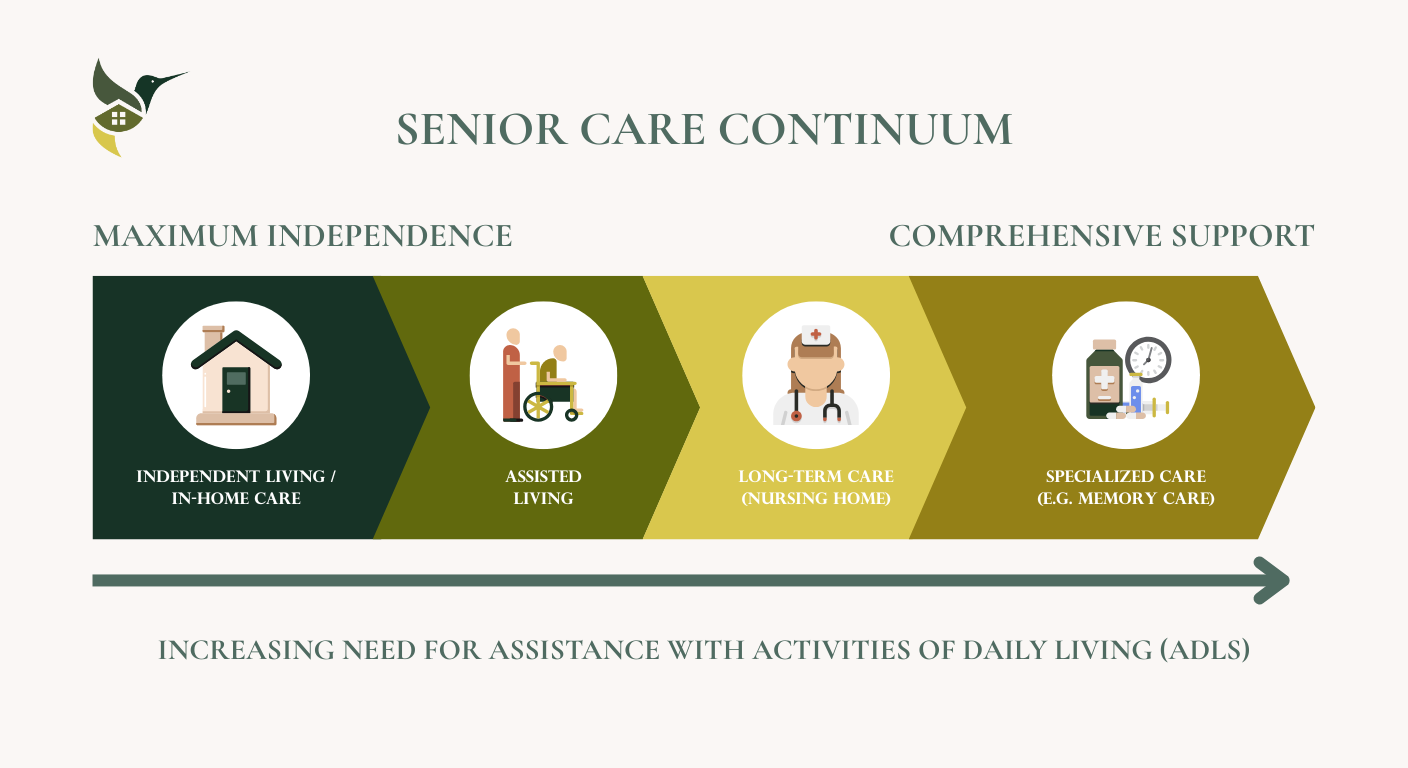
The continuum of care maps out senior living options, from independent living for active seniors to comprehensive nursing care for those with significant health needs.
Choosing the right senior care is one of the most significant decisions a family can make. The landscape of options, from retirement homes to nursing homes, can be complex. In Ontario, specific regulations and support systems are in place to guide these choices but knowing where to start is often the biggest hurdle.
The key is to match the level of support with an individual’s specific needs, particularly concerning their ability to perform activities of daily living (ADLs). These are fundamental self-care tasks like bathing, dressing, and eating. A person’s ability to manage these tasks often determines which senior living facilities are most appropriate.
This article serves as a comprehensive map to the different levels of senior care. We will break down each option, from minimal support that fosters independence to comprehensive nursing care for complex health issues. Whether you are planning for the future or addressing an immediate need, this information will empower you to navigate the system with clarity and confidence. Every stage of care is important. Independent living offers social activity. End-of-life care gives kind support. Each stage helps keep comfort, dignity, and peace of mind.
The first step on the continuum of care is focused on maximizing independence. This level is ideal for active seniors who are largely self-sufficient but may desire convenience, community, or light support to age in place, comfortably.
Typical features include private apartments or homes within a community. The community provides shared amenities like dining services, fitness centers, and organized social activities and events. Comprehensive medical care is not a main feature. Many facilities offer emergency call systems. They may also work with third-party providers for non-medical support services.
For many seniors, the goal is to remain in their own homes for as long as possible. Home and community care services make this a viable option. This approach delivers personalized support directly to a senior’s residence.
Services can range from occasional help to full-time support and may be publicly or privately funded.
In Ontario, for example, services may include visits from Ontario Health at Home for clinical needs, while private home care can fill gaps in scheduling or household help. This flexibility allows seniors to maintain their independence while receiving the full support they need to live comfortably and with respect.
Services can range from occasional help to full-time support and may be publicly or privately funded.
Assisted living bridges the gap between independent living and the intensive care of a nursing home. It is designed for seniors who need assistance with some activities of daily living but do not require 24/7 skilled medical supervision. This option combines the freedom of a private living space with the security of having professional caregivers readily available.

Assisted living gives a supportive place. It helps residents do daily tasks that are hard because of physical limits or mild memory problems. The level of support is tailored to each individual and documented in a personalized care plan.
Key services in assisted living facilities, also known as supportive living accommodations or supportive housing, include:
These community care facilities provide a safety net, allowing seniors to live with dignity while receiving the help they need.
Assisted living suits seniors who need daily help but still value independence and social interaction. Residents live in private or shared accommodations within a community offering on-site staff 24/7.
Common features:
Goal: To support dignity and independence while providing reliable help throughout the day.
Nursing facilities, also called nursing homes or long-term care homes, provide the highest level of medical support available outside a hospital. They serve seniors who require 24/7 monitoring and hands-on care from licensed nurses, therapists, and trained staff due to chronic illness, mobility challenges, cognitive decline, or recovery from serious health events.
Along with continuous medical oversight, these homes offer structured programs, rehabilitation therapies, and daily living support to maintain comfort, safety, and well-being. Care is supervised by physicians and delivered by Registered Nurses, Personal Support Workers, and allied health professionals, making nursing facilities essential for individuals whose needs can no longer be safely met at home or in more independent settings.
Services provided in a long-term care home include:
In Canada, these homes are provincially regulated. For example, Ontario’s Fixing Long-Term Care Act set standards for care, safety, and resident rights. Each resident has a detailed care plan that is regularly reviewed to ensure their needs are met.
Determining which level of elderly care fits best depends on a senior’s health, mobility, and daily-living abilities.
This quick comparison table can help guide your decision:
| Level of Care | Best For | Living Arrangement | Services | Support Intensity |
|---|---|---|---|---|
|
Independent Living |
Active, healthy seniors |
Private residence or retirement community |
Meals, activities, light housekeeping |
Low |
|
In-Home Care |
Seniors needing help with daily tasks |
Own home |
Personal care, companionship, errands |
Low–Moderate |
|
Assisted Living |
Seniors needing daily assistance |
Shared or private suite with staff |
24-hr personal support, meals, programs |
Moderate |
|
Long-Term Care |
Complex medical needs |
Licensed LTC facility |
Nursing care, therapies, dementia support |
High |
|
Palliative / Hospice |
Life-limiting illness |
Home, hospice, or hospital |
Comfort care, family support, pain management |
Very High |
Tip: Reassess care needs regularly. What begins as in-home help may evolve into assisted or long-term care over time.
MF Homecare is an independent platform that lets families book caregivers in their area on demand, without the premiums of traditional care agencies.


At MF Homecare, we believe independence and connection are the foundations of quality care. Our personalized home and community care services help seniors in Toronto and across the GTA live safely, happily, and confidently at home.
We provide:
Whether your loved one needs occasional assistance or full-time personal care, MF Homecare bridges the gap between independence and comprehensive support, ensuring every senior can age in place with comfort and respect.
Understanding the different levels of senior care is the foundation for making empowered decisions for yourself or a loved one. The journey begins with independent living or in-home care to support an active lifestyle. It then progresses through assisted living, specialized memory care, and skilled nursing care as needs increase. Each level of care gives a specific kind of help. This support helps seniors live with dignity, safety, and good quality of life at every stage.
Navigating this path requires careful assessment of personal, medical, and financial needs. We suggest you talk to medical professionals and have open talks with your family. By planning proactively and arming yourself with knowledge, you can find the right supportive environment that offers not just care, but also community, comfort, and peace of mind.
Home and Community Care. Ontario Ministry of Health
Home Care Services. Ontario Health at Home
Guide to Programs and Services for Seniors. Government of Ontario
Overview of Home Care Services. Home Care Ontario
Fixing Long-Term Care Act, 2021 (Ontario). Government of Ontario
Continuing Care in Canada. Canadian Institute for Health Information (CIHI)